Lately, Milk Powder Candy has really been catching on around the world! People seem to love its unique texture and those rich flavors — it’s pretty addictive, honestly. I remember hearing Dr. Emily Carter, a top expert in the candy biz, say, “Milk Powder Candy is like a perfect mix of old-school tradition and new-school innovation.” That really sums up why so many are drawn to it these days.
But you know, Milk Powder Candy isn’t just about satisfying a sweet tooth. It’s got cultural roots and comes with all kinds of different production methods. Getting it from different parts of the world can be tricky, though. You’ve got to navigate various markets, figure out what different regions prefer, and sometimes deal with suppliers who focus more on cutting corners than quality.
There are definitely some tough spots — keeping the quality and safety consistent isn’t always easy. As demand for Milk Powder Candy continues to grow, it’s more important than ever to prioritize ethical sourcing and think about the environmental impact of how it’s made. Cutting corners might save money short-term, but it can really hurt the final product. Honestly, sticking to good practices and constantly re-evaluating where and how this candy is made is key to keeping this industry healthy and sustainable.
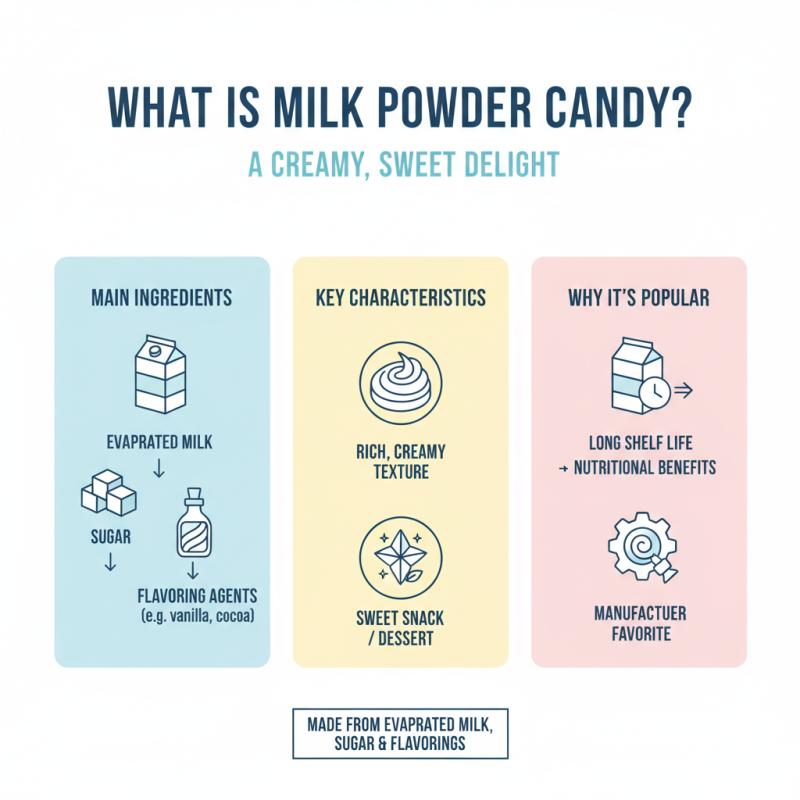
Milk powder candy is a delightful treat made primarily from evaporated milk, sugar, and various flavoring agents. This candy has a rich, creamy texture and is often enjoyed as a sweet snack or dessert. The main ingredient, milk powder, is known for its long shelf life and nutritional benefits, making it a popular choice among candy manufacturers. The process of creating milk powder candy involves carefully blending these ingredients under controlled conditions to achieve the desired consistency and flavor.
In addition to its taste, milk powder candy boasts versatility. It can be molded into various shapes or infused with different flavors. Some variations even include nuts or dried fruits for added texture and taste. However, challenges arise in sourcing high-quality milk powder. Not all suppliers offer consistent products. Variations in milk quality can affect the final candy. It's crucial to research suppliers, verify their practices, and conduct taste tests. Forming reliable partnerships is essential to ensure the best ingredients are used. Exploring local markets and international sources can yield valuable options for sustained supply.
The history of milk powder candy dates back to the early 20th century. This delightful treat emerged when milk was dehydrated to create powder. Initially, it catered to the needs of soldiers and travelers, offering a portable source of nutrition. Over time, its popularity spread across various cultures, each adding unique twists and flavors.
Filipino Milk Powder Candy represents a prime example of this evolution. This candy features condensed milk and sugar, giving it a chewy texture. In recent years, market research indicates the global milk powder candy market has experienced significant growth, projected to reach USD 1.5 billion by 2025. The rise of e-commerce helps facilitate access to these candies worldwide, allowing consumers to enjoy regional specialties. Local producers often highlight their handmade processes and traditional recipes, yet challenges persist in standardizing quality.
While the resurgence of milk powder candy is promising, it raises questions about sourcing. A reliance on several suppliers can compromise quality. Emerging markets hold potential, but regulation varies considerably. The industry must navigate these complexities to provide reliable products. Balancing tradition with modern demand remains essential for manufacturers to thrive in a competitive landscape.
Milk powder candy is gaining popularity as a delicious treat that appeals to both children and adults. The primary ingredients in its production include milk powder, sugar, and flavoring agents. Milk powder serves not only as the main ingredient but also provides essential nutrients. According to industry reports from the Dairy Industry Association, milk powder contributes significantly to the taste and texture of the candy, making it creamy and rich.
Another critical component is sugar, which acts as a preservative and enhances sweetness. Research by confectionery experts indicates that sugar, when balanced with milk powder, creates a favorable melting point. This balance influences the mouthfeel of the candy. Additionally, flavoring agents, such as vanilla or cocoa, are often added to differentiate products in a competitive market. Data from market analytics shows that flavor variations are key in appealing to diverse consumer preferences worldwide.
Sourcing these ingredients globally can be challenging. Suppliers must ensure the quality and safety of milk powder. Inconsistent quality can lead to defects in the final product. Reports by the Food Safety Authority stress the importance of rigorous testing. This underlines a critical point: quality assurance in ingredient sourcing is essential for maintaining consumer trust and satisfaction.
Milk powder candy comes in various forms, shaped by regional tastes and traditions. In India, for example, you have "barfi," a Fudge-like treat made from milk solids and sugar. It often features nuts or spices. This candy is popular during festivals and special occasions. In contrast, Japan's "dairy caramel" offers a chewy, creamy texture. This candy includes rich milk flavors and is often enjoyed as a snack.
In South America, "arequipe" or "dulce de leche" highlights the versatility of milk. This sweet treat is made by slow-cooking milk and sugar until it caramelizes. It serves as a filling for pastries and even a spread. Meanwhile, in the Middle East, "ma'amoul" cookies incorporate milk powder into their dough, resulting in a crumbly, rich flavor that complements the date filling. Each type reflects unique cultural influences and culinary practices.
Sourcing milk powder candy requires understanding these regional specialties. Demand for diverse treats is on the rise globally. However, challenges in sourcing authentic products can emerge. Suppliers may vary in quality, necessitating careful research. Consider attending food expos or trade shows to connect with trustworthy manufacturers. Knowledge about sourcing can enhance your selection process, ensuring you provide quality treats to your customers.
The global market for milk powder candy is expanding. This candy has gained popularity for its unique texture and flavor. Countries in Asia and Europe are leading the demand. Consumers are looking for high-quality products made from wholesome ingredients. This trend is creating opportunities for manufacturers everywhere.
Sourcing OEM Milk Powder Candy is essential for business growth. Companies must understand their target markets. They should explore local preferences and cultural influences on candy choices. Transparency in sourcing is vital. It builds trust with consumers. However, identifying reliable suppliers can be challenging. Brands must be diligent in vetting their sources to ensure quality.
Investing in innovative flavors and packaging can set products apart. Companies should consider partnerships with local distributors. This can help navigate regional regulations and market entry strategies. Sustainability trends are also shaping consumer decisions. Brands must reflect these values in their offerings to remain competitive. The milk powder candy sector is ripe for exploration, but it requires thoughtful planning and execution.
Finding quality milk powder candy suppliers can be challenging. Many options are available globally. However, not all suppliers maintain high standards. It is essential to research and verify their credibility.
Start by seeking suppliers with industry experience. Look for those who specialize in Custom Milk Powder Candy. They should demonstrate expertise in sourcing and production. Review their certifications and quality control measures. Transparent processes are vital in ensuring the safety of their products.
Connect with industry networks and trade shows. This can provide firsthand insights into reputable suppliers. Reach out to other businesses for recommendations. Testimonials can be useful but require careful verification. Ensure the suppliers can meet your specific needs regarding flavor and formulation. This can enhance your product offerings significantly.
| Supplier Location | Quality Certification | Production Capacity (Metric Tons/Month) | Minimum Order Quantity (Units) | Average Lead Time (Days) |
|---|---|---|---|---|
| China | ISO 9001 | 500 | 1000 | 30 |
| India | FSSAI | 300 | 500 | 45 |
| New Zealand | HACCP | 800 | 2000 | 25 |
| USA | FDA Approved | 600 | 1500 | 20 |
| Brazil | GMP | 400 | 750 | 40 |
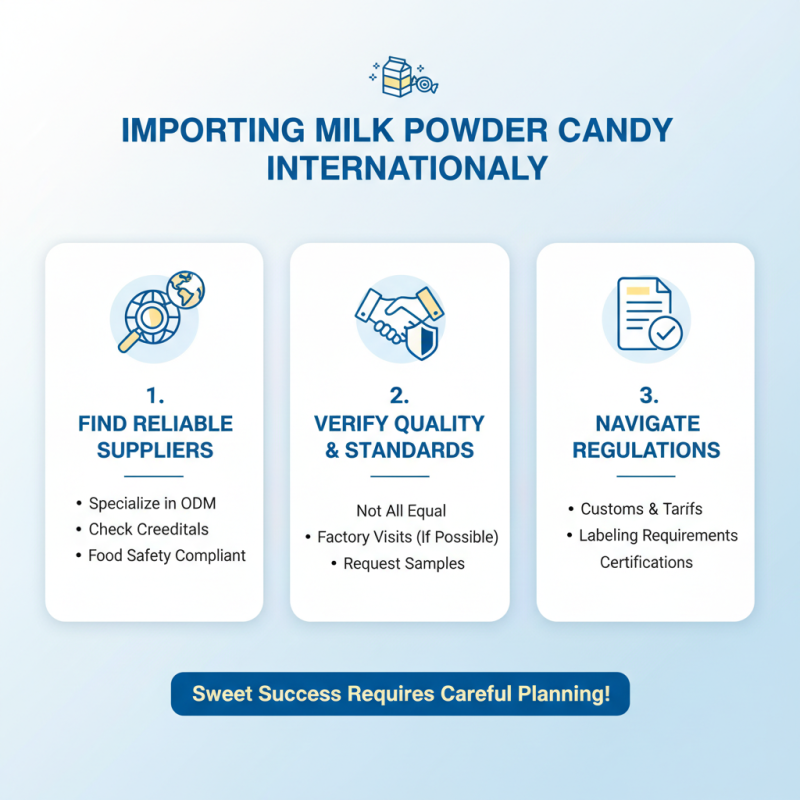
Importing milk powder candy can be a rewarding venture, but it requires careful planning and consideration. Start by identifying reliable suppliers who specialize in ODM Milk Powder Candy. Check their credentials and ensure they comply with international food safety standards. You might face challenges when verifying quality. Not all suppliers maintain the same high standards. Visit factories if possible, or request samples to evaluate the product yourself.
Understanding the target market is crucial. Research consumer preferences in your region. Taste, texture, and packaging can vary significantly across cultures. Look for packaging options that appeal to local consumers. Adapting to regional preferences can lead to better sales. Be aware of import regulations and tariffs in your country. These rules can affect pricing and sales strategies. Collaborate with customs brokers if needed.
Building a robust logistics plan is vital for smooth operations. Shipping milk powder candy can present unique challenges, such as temperature control and shelf life. Establish clear communication channels with your suppliers and logistics partners. Delays in shipping can disrupt your sales timeline. Be prepared to adjust your strategy if unexpected issues arise. Having a backup plan can help manage risks associated with global sourcing.
: Milk powder candy is a sweet treat made from evaporated milk, sugar, and flavoring. It has a creamy texture.
The main ingredients are milk powder, sugar, and various flavoring agents. Milk powder provides nutrition and taste.
Ingredients are blended under controlled conditions to achieve the right consistency. This process is crucial for flavor.
Quality varies among suppliers. Inconsistent milk powder affects the final candy product and can lead to dissatisfaction.
Yes, it can be infused with different flavors like vanilla or cocoa. Variations attract diverse consumers.
Sugar enhances sweetness and acts as a preservative. It balances the mixture for optimal mouthfeel and melting point.
Yes, sourcing high-quality milk powder is challenging. Not all suppliers meet safety and quality standards.
Nuts or dried fruits can enhance texture and taste. These additions create more appealing variations of the candy.
It's essential for maintaining consumer trust. Rigorous testing of ingredients ensures a safe and enjoyable product.
Research is key. Conduct taste tests and explore local and international markets for better ingredient options.
Milk Powder Candy is a delightful treat made primarily from milk powder, sugar, and other ingredients, offering a rich flavor and creamy texture that appeals to many around the globe. Its history traces back to various cultures, showcasing an evolution that has adapted to regional tastes and preferences. Key ingredients play a significant role in the production of Milk Powder Candy, influencing its taste and texture.
As the popularity of Milk Powder Candy grows, various types have emerged worldwide, each reflecting local traditions. The global market presents numerous trends and opportunities for sourcing quality Milk Powder Candy, with potential suppliers available across different regions. For companies looking to import this sweet delicacy, understanding how to find reliable suppliers and navigate international trade regulations is essential for success in this expanding market.